

Our Collective Story
Depressing
Watching my mother-in-law being consumed by this disease is depressing at many levels. It is sad to watch her, an educator, a social butterfly, an avid traveler, and a person with refined social graces, descend into cognitive oblivion. It is depressing to see the emotional impact it has on my wife and her sister. It is also depressing to realize that some us may soon follow down the same path, for no obvious fault, and with no guarantee that any lifestyle change would help avoid it. We can just hope science will soon find a way to overcome this nasty disease.
Anonymous, Family member
Bethesda, MD
Angry
I am angry that this disease took my mother away from me. I am angry that this is the end to her well lived life. I am angry that this disease has caused a rift with siblings. I am angry that healthcare professionals really do not have answers or adequate solutions. I am angry with myself for not being able to care for her in my home.
Anonymous, Family member
Rockville, MD
Scared
My mother, who lived to the age of 96, always said that losing cognition was the worst thing that could happen to anyone. She was incredibly fortunate to have been sharp as a tack until the day she died, but her life-long warning sits deep inside me and creates a well of fear. I'm 66 and, like many people my age, I often forget a name, the details of an event, something. I fear that I'm getting Alzheimer's and no matter how much I read that this kind of forgetfulness is natural, it scares the s**t out of me.
Anonymous, Observer
Cambridge, MA
Nightmare
Never in my life would I have imagined this to happen. Your mother was taken away but still here. An insidious disease that crept in and now creates so many emotions. I find myself grasping for those moments of the mom I knew before and fearing the mom I meet next, her personality forever changing. Always having to adapt to the new person you meet every day. It feels unfair. I always am reminding myself to appreciate today because today is likely something I will miss in the future. She did not deserve this, nobody does.
Anonymous, Family member
Ellicott City, MD
Missing
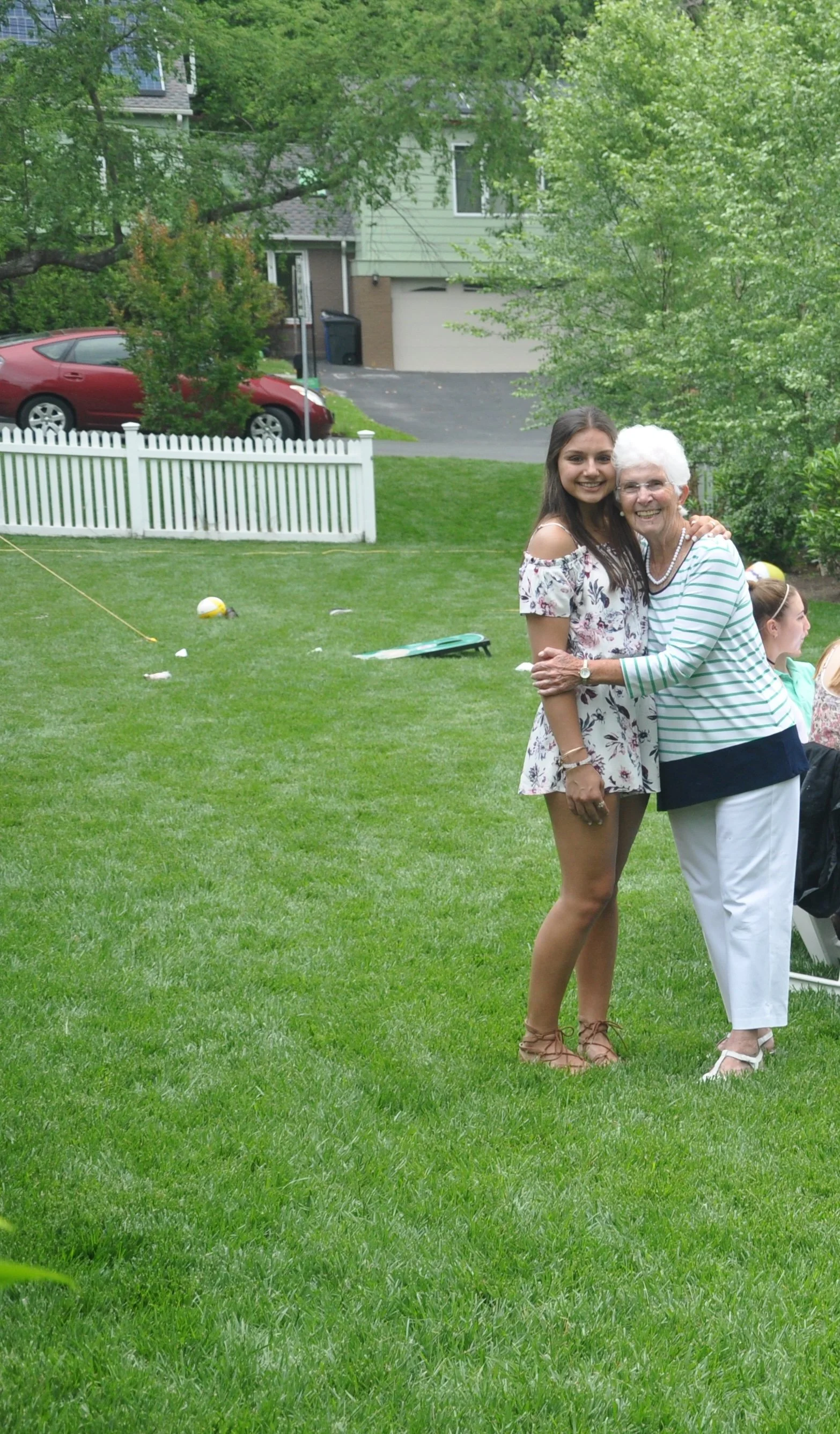
My grandmother has Alzheimer’s. Watching her go through the different stages has been so difficult. I miss her and her fun-loving personality, always ready for an adventure. I wish I had had more time to hang out with her and get to know her as an adult. Spending time with her, I can catch glimpses of her personality, but it's getting harder and harder to see. I miss the person I knew before this happened.
Nina G., Family member
Phoenix, AZ
Unfortunate
As a healthcare provider, working with patients who have dementia is both challenging and profoundly meaningful. Each individual’s journey through the various stages of the disease is unique, no two cases are ever quite the same. It is deeply difficult to witness the slow decline that dementia brings, especially as patients progress into its terminal stages. The gradual loss of memory, independence, and recognition can be heartbreaking not only for families but also for those of us who provide care.
Despite the sadness that often accompanies this disease, it is a privilege to support patients and their loved ones through such a vulnerable time. I would encourage providers and the family to offer compassionate care focusing on comfort, dignity, and honoring each patient’s wishes. While we cannot stop the progression of dementia, we can ensure that our patients (and families) feel valued, respected, and cared for every step of the way.
Christina Byam, Nurse practitioner
Washington, DC
Unpredictable
Dealing with people with cognitive deficits is very unpredictable, you'll never know what version of the person you will see and get to mingle with. While it can be frustrating and disheartening at times, this presentation of dementia challenges me to change the way I interact with my patients and teaches me how to be more patient and understanding. They'll have good days, and not so good days, and while it's more challenging to engage them on their not-so-good days, it forces me to come up with creative ways to connect with them. Sometimes it will be successful, other times it will be a failure, but the most important thing is I get to come back and try again.
Anonymous, Professional treating people living with Alzheimer’s
Gaithersburg, MD
Scared
I don’t have any signs of Alzheimer’s but have watched dear friends slowly sink into a different place because of the disease. I worry that may be me, one day. My greatest worry is that my kids would have to see me , and that it might poison, not just their “present” but some how rob them of happy, memories of their childhood, and that all their memories of me would be of the “Alzheimer’s me.”
Anonymous, Friend
Bethesda, MD
Incomprehensible
For a life that was enriched by travel, reading, and learning... it is incomprehensible that my special friend is absent from her loving family and friends. She is missed. I hope her photobooks bring her joy and smiles.
Donna D., A caring friend who has cherished memories
Port St. Lucie, FL
Frustrating
Friends dealing with family members often express frustration with how simple things in life become so much more difficult. As a researcher, I am also frustrated with how really promising new approaches constantly hit roadblocks.
Anne Messer, Friend, as well as a neurological disease researcher
Albany, NY
Frustrated
Having watched my family care for my grandfather, and later an aunt that helped raise me, frustration (and sadness) are the lingering feelings. Watching everyone trying to come up with solutions when there weren't any, was such a helpless state to be in. I've been exposed to it more recently as an adult when helping with a non-family member, and it actually hit me much harder, as the enormity of the task (of caring for another) became more real and overwhelming.
Pete, Family member (both grandfather and aunt passed away years ago)
Jupiter, FL
Compassion
Seeing a friend who was an accomplished, published writer struggle as cognitive decline increases and she is more unable to manage.. I know her through our Buddhist meditation group, so the emphasis on the teachings of compassion particularly come to mind.
Anonymous, Friend
Falmouth, ME
Heartbreaking
It is so sad to watch an independent, vibrant person become dependent on others for basic needs. It is also upsetting to witness the loss of communication and ability to interact with me.
Anonymous, Family member
Philadelphia, PA
Anxious
Alzheimer’s. Just the word makes me anxious these days. As I advance through my seventh decade on Earth, it’s become more common for friends, former colleagues or neighborhood acquaintances to share that they or a spouse have or are affected by Alzheimer’s. I used to have an irrational fear of dying from cancer. Then I got cancer, and beat it. I no longer worry about that. I do worry about Alzheimer’s -- for me, for my family. Even though I know ongoing research and new treatments offer hope to slow the progression, there is yet no cure. Am I irrational?
Anonymous, Friend
Takoma Park, MD