Our Collective Story
-
Difficult
I understand that there is a lot of research going on in this field and the Alzheimer organization believes that they will defeated it in the lifetime of someone who's alive now. So that's promising but any form of dementia is difficult because to properly care for your loved one is challenging and is a difficult emotional Journey.
Anonymous, Daughter of someone living with dementia
North Potomac, MD
-
Bereft
My mother, sister and I lost our husband and father seven long years before he died. He was an intelligent, thoughtful, shy and loving man who fortunately remained kind until the end.
With his onset of Alzheimer's, I felt I lost my confidant and closest friend. I miss him to this day- 36 years later.Kris Martin, Family member
Vienna, VA
-
Frustrated
Anonymous, Family member
Silver Spring, MD
-
Withering
Anonymous, Family member
Phoenix, AZ
-
Fear
To see the fear in my Mother's eyes when she understood what changes were happening. To watch my Mother cry and that she can't be that person. She never wanted to forget all her babies.
Roberta, A professional treating people living with Alzheimer’s
Gaithersburg, MD
-
Robbery
When you've witnessed the slipping away of an intelligent, witty, and charismatic person, it feels as if they have been robbed. The whole family and their friends feel robbed, robbed of time with them and of memories yet to come. Like many robberies, it is random and cruel and senseless. Everyone suffers.
Lori, A family member of someone who had Alzheimer’s
Westport, CT
-
Tough
In my own experiences having a loved one with dementia, and in taking care of patients with dementia and their families as a nurse, "tough" is the word that comes to mind. It's tough to watch someone you love not remember core things about themselves. It's tough to watch others experience the same thing. Managing the behaviors while also preserving dignity - tough.
Kelly, Family member, Professional treating people living with Alzheimer’s
Chicago, IL
-
Sorrow
It is a profound sadness to see a loved one lose their precious memories & connections to all that they have been in this world & to all those who know & love them. It is beyond "the long goodbye" as we see our loved one lose their connection, brilliance & faculties. It is cruel, indeed, but it is still so hard to say goodbye!
Rosemary Tiernan, We have gone down this road with family members & dear friends. The caregivers are a breed apart. Angels in this world.
Bethesda, MD
-
Loss
My husband has mild cognitive decline and I feel such a loss for the person he was five years ago, and for the relationship we have had. I miss him. I can only imagine what it is like to see someone slip away so profoundly with this terrible disease.
Connie, Caregiver for my husband, who has cognitive decline
Bethesda, MD
-
Unsettling
It seems that the disease is ever shifting. Once you get settled with the behaviors/changes in personality of your loved one it changes again and you have to find a new normal.
Anonymous, Family member, Caregiver
Gaithersburg, MD
-
Grief
Living life alongside a loved one with Alzheimer's means experiencing parts of the grief cycle all day, every day for as long as your loved one lives. There is so much sadness, anger, confusion, exhaustion, and hopelessness that you must learn to balance with the happy parts of life in order to prevent completely losing yourself.
Anonymous, Family member
Elkridge, MD
-
Heartbreaking
Heartbreaking — because watching someone you care about slowly slip away in pieces is a unique kind of grief. You lose them not all at once, but moment by moment: a forgotten name, a confused expression, a story they once told with pride now lost to the fog.
It’s heartbreaking because the person you knew is still right there, and yet not fully there. You see flashes of who they were — a smile, a gesture, a familiar tone — and those moments feel precious and painful at the same time.
It’s heartbreaking because you’re not just mourning what’s gone, but fighting to treasure what remains. You learn to hold onto the small victories, to love them without expecting them to remember, and to steady yourself through the quiet sadness of being recognised less and less.
And yet, despite the heartbreak, there’s also love — deeper, quieter, more patient — the kind that carries you through the hardest parts.Trevor Saldanha, Family member
Melbourne, Australia
-
Helplessness
… a deep sense of helplessness… a quiet ache in knowing we cannot stop the fading of memories. Yet in that helplessness, we also learn something profound about love. We learn to sit with someone in their changing world, to meet them where they are, and to treasure the small, fleeting moments of connection. It reminds us that presence is sometimes the only gift we can offer, and often, it is enough…
Anonymous, Friend
Melbourne, Australia
-
Heart-wrenching
My father disappeared into a world of anxiety, confusion, and frequent terror as dementia overtook him. Accepting that he was gone was always hard, but most heart-wrenching when sparks of his enthusiasm for life shone out. "Are you the Queen of England?" he asked?" "I used to love chemistry. Why have I forgotten?" And pulling himself upright in his chair with a smile, "Where are we going to go today?" Then his fears of poverty, car accidents, cruel headmistresses, and German bombs would overtake him again—with no way for me to reach into his sad new world.
Pamela, Daughter, lost my father to non-Alzheimer's dementia
Arlington, VA
-
Cruel
She has been robbed of the pleasure of enjoying the family she worked so hard to build. Her lessons about LOVE, however, are instilled in the hearts of her children and grandchildren.
Martha, Family member
Rockville, MD
-
Defeated
Lewy Body Dementia, a form of Alzheimer’s, left me with a profound sense of defeat. My mother lived with it for more than 12 years, and we fought it with everything we had, but the disease kept taking—slowly, unpredictably, and relentlessly—until there was nothing left to take. What people don’t see is the quiet grief that begins long before the end: the small losses, the confusion, the moments when recognition fades. The best advice I received was to meet her where she was each day. It didn’t change the outcome, but it gave us small, meaningful moments of connection.
Anonymous, Family member
Gaithersburg, MD
-
Draining
Mentally draining for friends and family.
Physically draining for care givers.
Financially draining for the patient.Anonymous, Family member
Silver Spring MD
-
Grief
You have a vision for your life and it doesn't include losing yourself, your partner, your parent while the body lives on.
Anonymous, Family member, Caregiver
South Portland, ME
-
Helpless
Watching someone go through this treacherous deterioration is heart wrenching and makes one feel helpless.
Anonymous, Family member
Reno, NV
-
Depressing
Watching my mother-in-law being consumed by this disease is depressing at many levels. It is sad to watch her, an educator, a social butterfly, an avid traveler, and a person with refined social graces, descend into cognitive oblivion. It is depressing to see the emotional impact it has on my wife and her sister. It is also depressing to realize that some us may soon follow down the same path, for no obvious fault, and with no guarantee that any lifestyle change would help avoid it. We can just hope science will soon find a way to overcome this nasty disease.
Anonymous, Family member
Bethesda, MD
-
Angry
I am angry that this disease took my mother away from me. I am angry that this is the end to her well lived life. I am angry that this disease has caused a rift with siblings. I am angry that healthcare professionals really do not have answers or adequate solutions. I am angry with myself for not being able to care for her in my home.
Anonymous, Family member
Rockville, MD
-
Conundrum
Conundrum: insoluble dilemma. Moment to moment challenge encased in grief, joys, fears, wonders, wonderings, sadness, insights, growth, wisdom.
Carol, Family member, Caretaker
Falmouth, MA
-
Scared
My mother, who lived to the age of 96, always said that losing cognition was the worst thing that could happen to anyone. She was incredibly fortunate to have been sharp as a tack until the day she died, but her life-long warning sits deep inside me and creates a well of fear. I'm 66 and, like many people my age, I often forget a name, the details of an event, something. I fear that I'm getting Alzheimer's and no matter how much I read that this kind of forgetfulness is natural, it scares the s**t out of me.
Anonymous, Observer
Cambridge, MA
-
Nightmare
Never in my life would I have imagined this to happen. Your mother was taken away but still here. An insidious disease that crept in and now creates so many emotions. I find myself grasping for those moments of the mom I knew before and fearing the mom I meet next, her personality forever changing. Always having to adapt to the new person you meet every day. It feels unfair. I always am reminding myself to appreciate today because today is likely something I will miss in the future. She did not deserve this, nobody does.
Anonymous, Family member
Ellicott City, MD
-
Missing
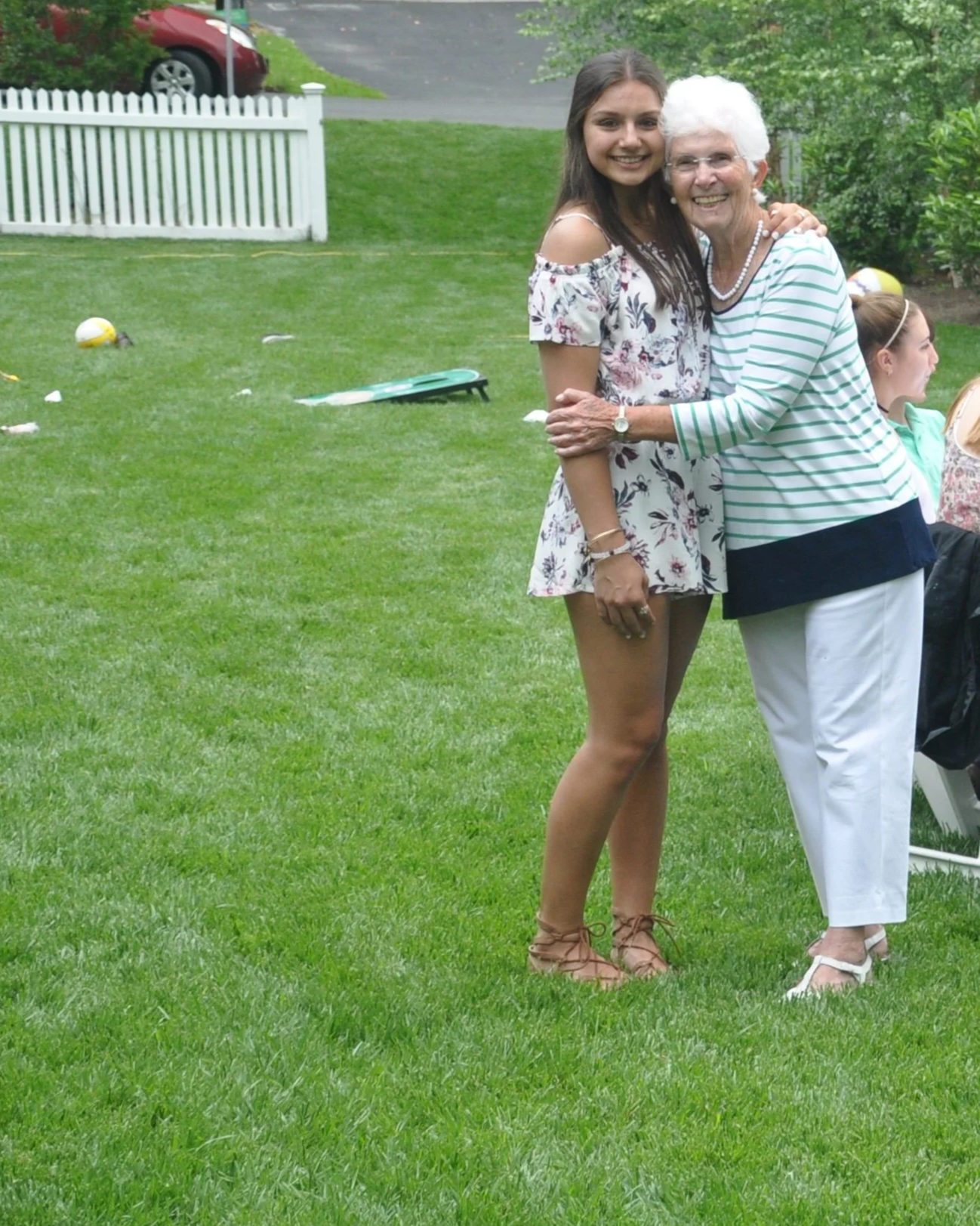
My grandmother has Alzheimer’s. Watching her go through the different stages has been so difficult. I miss her and her fun-loving personality, always ready for an adventure. I wish I had had more time to hang out with her and get to know her as an adult. Spending time with her, I can catch glimpses of her personality, but it's getting harder and harder to see. I miss the person I knew before this happened.
Nina G., Family member
Phoenix, AZ
-
Unfortunate
As a healthcare provider, working with patients who have dementia is both challenging and profoundly meaningful. Each individual’s journey through the various stages of the disease is unique, no two cases are ever quite the same. It is deeply difficult to witness the slow decline that dementia brings, especially as patients progress into its terminal stages. The gradual loss of memory, independence, and recognition can be heartbreaking not only for families but also for those of us who provide care.
Despite the sadness that often accompanies this disease, it is a privilege to support patients and their loved ones through such a vulnerable time. I would encourage providers and the family to offer compassionate care focusing on comfort, dignity, and honoring each patient’s wishes. While we cannot stop the progression of dementia, we can ensure that our patients (and families) feel valued, respected, and cared for every step of the way.Christina Byam, Nurse practitioner
Washington, DC
-
Unpredictable
Dealing with people with cognitive deficits is very unpredictable, you'll never know what version of the person you will see and get to mingle with. While it can be frustrating and disheartening at times, this presentation of dementia challenges me to change the way I interact with my patients and teaches me how to be more patient and understanding. They'll have good days, and not so good days, and while it's more challenging to engage them on their not-so-good days, it forces me to come up with creative ways to connect with them. Sometimes it will be successful, other times it will be a failure, but the most important thing is I get to come back and try again.
Anonymous, Professional treating people living with Alzheimer’s
Gaithersburg, MD
-
Saddened
Sadly, some difficulties cannot be surmounted by patience and perseverance.
Jock, A son "missed" for far too long by Mother Nellie who was sadly unaware of her missing
Silver Spring, MD
-
Scared
I don’t have any signs of Alzheimer’s but have watched dear friends slowly sink into a different place because of the disease. I worry that may be me, one day. My greatest worry is that my kids would have to see me , and that it might poison, not just their “present” but some how rob them of happy, memories of their childhood, and that all their memories of me would be of the “Alzheimer’s me.”
Anonymous, Friend
Bethesda, MD
-
Incomprehensible
For a life that was enriched by travel, reading, and learning... it is incomprehensible that my special friend is absent from her loving family and friends. She is missed. I hope her photobooks bring her joy and smiles.
Donna D., A caring friend who has cherished memories
Port St. Lucie, FL
-
Hopeful
This is a wonderful way to share one's feelings and be supportive of one another. Thank you!
Anonymous, Family member
South Portland, ME
-
Frustrating
Friends dealing with family members often express frustration with how simple things in life become so much more difficult. As a researcher, I am also frustrated with how really promising new approaches constantly hit roadblocks.
Anne Messer, Friend, as well as a neurological disease researcher
Albany, NY
-
Frustrated
Having watched my family care for my grandfather, and later an aunt that helped raise me, frustration (and sadness) are the lingering feelings. Watching everyone trying to come up with solutions when there weren't any, was such a helpless state to be in. I've been exposed to it more recently as an adult when helping with a non-family member, and it actually hit me much harder, as the enormity of the task (of caring for another) became more real and overwhelming.
Pete, Family member (both grandfather and aunt passed away years ago)
Jupiter, FL
-
Loss
Anonymous, Other
Bethesda, MD
-
Compassion
Seeing a friend who was an accomplished, published writer struggle as cognitive decline increases and she is more unable to manage.. I know her through our Buddhist meditation group, so the emphasis on the teachings of compassion particularly come to mind.
Anonymous, Friend
Falmouth, ME
-
Heartbreaking
It is so sad to watch an independent, vibrant person become dependent on others for basic needs. It is also upsetting to witness the loss of communication and ability to interact with me.
Anonymous, Family member
Philadelphia, PA
-
Anxious
Alzheimer’s. Just the word makes me anxious these days. As I advance through my seventh decade on Earth, it’s become more common for friends, former colleagues or neighborhood acquaintances to share that they or a spouse have or are affected by Alzheimer’s. I used to have an irrational fear of dying from cancer. Then I got cancer, and beat it. I no longer worry about that. I do worry about Alzheimer’s -- for me, for my family. Even though I know ongoing research and new treatments offer hope to slow the progression, there is yet no cure. Am I irrational?
Anonymous, Friend
Takoma Park, MD
-
Loss
I work with people experiencing different forms of dementia. I see them losing abilities - memory, language, physical. .It can be so sad, but I try to support them and draw out any positive aspects and opportunities to help them enjoy their lives.
Anonymous, Professional treating people with Alzheimer’s
Bethesda, MD
-
Fun
That was the last word my sister said to me, after being at our family Christmas singalong. It had been many months since she'd been able to speak, but her enjoyment shone in her eyes and while leaving she did turn to me and say "fun." We can all be encouraged when fun is possible for those with Alzheimer's.
Anonymous, Family member
Bethesda, MD
-
Hope
Dr. Taryn Fortune, Professional treating people with Alzheimer’s
Silver Spring, MD
-
Confusion
Anonymous, Friend
Bethesda, MD
-
Life-changing
Dementia changes the life and the relationships of the person suffering with the disease as well as their caregivers and family members.
Anonymous, Family member
Baltimore, MD
-
Sadness
My older brother recently was diagnosed--he's in the early stages, in his mid-70s. I'm anticipating slowly losing him. I hope the sadness turns to acceptance. I also volunteer with hospice patients with dementia. I hope to show my brother the same tolerance I give my patients--sometimes that grace and patience is harder to give for family members who witness their loved-one's decline.
Anonymous, Family member, Volunteer helping people living with Alzheimer's
Silver Spring, MD
-
Tragic
Alzheimer's is tragic for not only the patient, but all of the family and friends that support the patient. It is all encompassing and heartbreaking for those involved.
Lindy Paris, Family member
Marlborough, NH
-
Unfair
Mom thoroughly enjoyed her life as a mother, grandmother, friend, educator, and world traveler. She understood how to live in the moment before mindfulness became popular. Now she can’t retrieve her lifetime collection of moments. Having a disease that forces one to live only in the present seems entirely different from choosing that state, especially at a time when memories are a huge part of appreciating a life well lived.
Amy G., Family member
Bethesda, MD