

Our Collective Story
Altering
When a parent or grandparent gets Alzheimer’s it can be altering not only in a health sense but in the structure of the family as well. Many grandparents hold together the family unit so when one or both are diagnosed and start to suffer it tends to be the end of family gatherings and traditions.
Anonymous, Family member
Philadelphia, PA
Unfair
I chose this word because it seems to apply so broadly across the spectrum of the affected community. It is obviously unfair to the person themselves, who loses a lifetime of memories, their valued independence, their ability to engage with those they love and so much more. It's also unfair to their family, spouse, siblings, children, grandchildren, friends, who lose the essence of their loved one, and are doing all they can to make them comfortable, while having to witness the tragic decline, their own lives compromised and with fears for their own futures. One builds a life of experiences, accomplishments and love over so many years, while Alzheimer's and other forms of dementia robs them, replacing a life of treasures with so much sadness, dependence, and grief. Moments of happiness, contentedness and connection remain the bright spots, along with our own memories to be cherished.
Jackie, Friend
Churchton, MD
Love
As caregivers, we see that Alzheimer’s takes away memories and recognition, but it cannot take away love. Even when our loved one no longer knows our name, love is still felt through a gentle touch, a familiar voice, and daily care. Loving someone with Alzheimer’s means being present with patience and compassion, even when it is exhausting and painful. This love asks for nothing in return. Alzheimer’s changes relationships, but it also reveals the deepest form of love—one that remains when memory is gone.
Tsehay G., Professional treating people living with Alzheimer’s
Gaithersburg, MD
Perceptive
I am a speech-language pathologist working in a skilled nursing facility and I work with residents with Alzheimer's and other dementias every day. Additionally, my own grandmother lived with dementia for about 8 years until she passed away this past July. One thing I try to do as a therapist and caregiver of those with dementia is meet them where they are. Dementia affects the mind’s ability to process and recall information, however it does not take away emotions. If we tap to the essential emotions people feel, we can enter each other's worlds and find commonality and humanity in this diagnosis. You are not alone.
Pascale H., Family member, Professional treating people living with Alzheimer’s
Glenarden, MD
Disheartening
It was very disheartening to me to see how fast it overtook my aunt's faculties. It started out as her first getting lost going to the usual and familiar places she would always drive to. Then, it seemed like overnight, she became very childlike and not recognizing anyone in her family.
Suzanne C., Family member
Washington, DC
Isolation
Those with Alzheimer’s and those caring for them feel isolated. Family members who live with someone afflicted with Alzheimer’s feel isolated from the one they love who cannot recognize them and from others who don’t understand. Those afflicted become isolated from the world and those that love them.
Anonymous, Have friends who have or had family members with Alzheimer’s
Naples, FL
Challenging
That while many of the symptoms Alzheimer's (and the other dementias) can be challenging, they can be effectively managed.
Dr. Schor, A professional treating people living with Alzheimer’s
Olney, MD
Constricting
From the Latin verb for “constrict,” meaning “tightly bound together.” I may think that the sufferer has entered a labyrinth—an unknowable reality of narrowing passages and vanishing exits, where she is increasingly lost to me. But in truth we are bound together in this loss, by this loss, because every day the labyrinth changes who we are to one another and to ourselves.
Kelly, Family member
Asheville, NC
Confused
The person with dementia can often not pull meaning from the past and match it with the present. My mother loved having everything kept ready the night before. But later couldn't remember why she would place a tray and cup and tea leaves near the gas stove. Her spirit of joy and positivity has not left her for which I am most grateful.
Anonymous, Family member, Caregiver
Dalhousie, India
Scared
I chose scared as my word because seeing a family member lose themselves and not be able to live without constant care is frightening. It scares me that, that could happen to someone else in my family, and even eventually me. Also, seeing how it affects the people around the individual with dementia is scary and sad. Being unable to stop a loved one’s sickness and not having the ability to take care of them as they worsen is so upsetting.
Anonymous, Family member
Springfield, PA
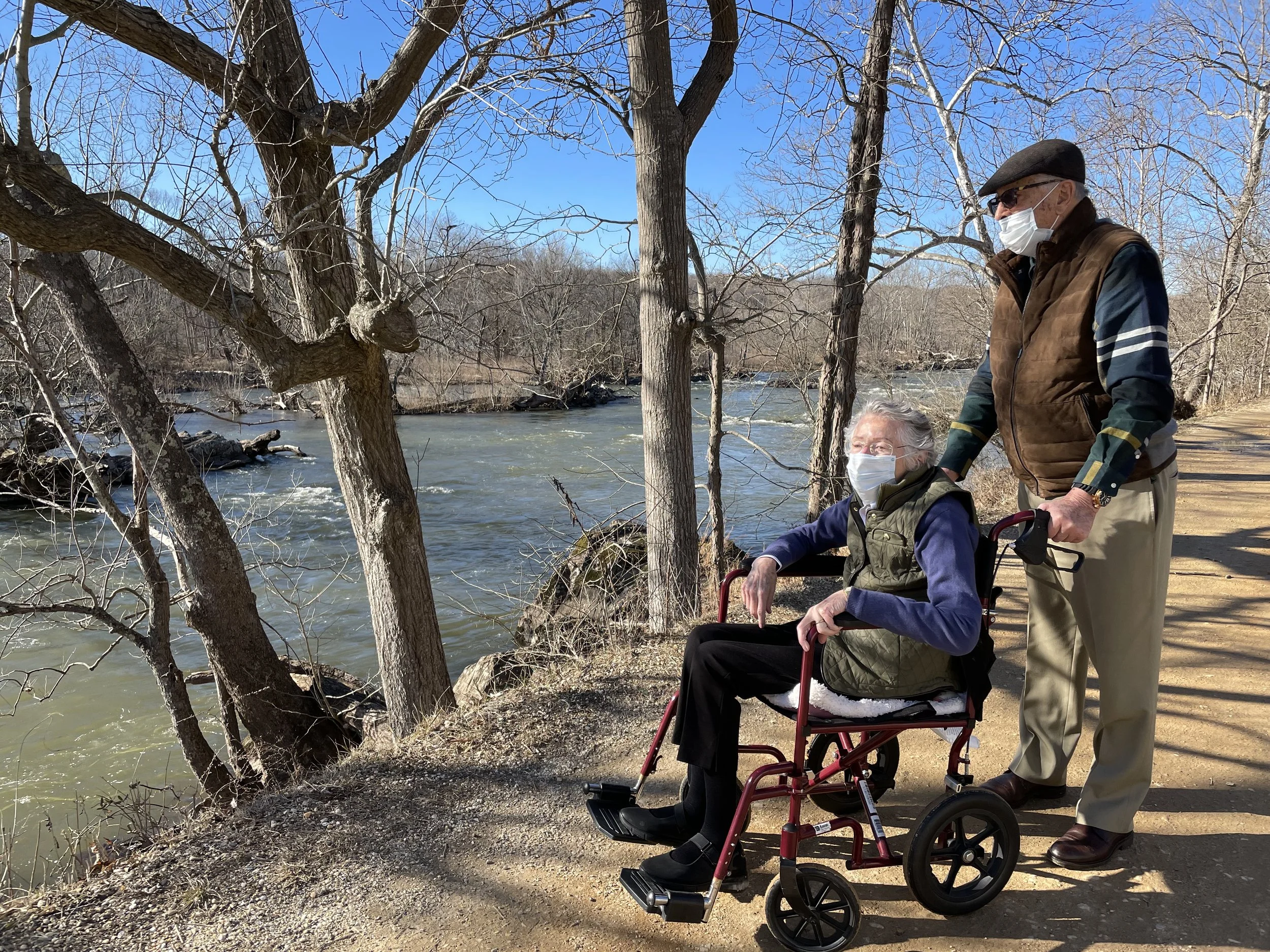
Loss
My mother suffered from dementia in the final years of her life. She lived until 83 and had a full life, and often expressed gratitude about how blessed she was. With the onset of dementia and Parkinson’s disease in her last years, my mother was fragile but so sweet and we cared for her like a child. But the person she used to be was gone. Before, she was a caring, strong and intelligent woman but I struggle to recollect that person. Her final 2 years were traumatic for us. We worried constantly about her deteriorating condition. I wish I could remember her in her younger self, when she was my real mother.
Lena, Family member
Riffa, Bahrain
Difficult
I understand that there is a lot of research going on in this field and the Alzheimer organization believes that they will defeated it in the lifetime of someone who's alive now. So that's promising but any form of dementia is difficult because to properly care for your loved one is challenging and is a difficult emotional Journey.
Anonymous, Daughter of someone living with dementia
North Potomac, MD
Bereft
My mother, sister and I lost our husband and father seven long years before he died. He was an intelligent, thoughtful, shy and loving man who fortunately remained kind until the end.
With his onset of Alzheimer's, I felt I lost my confidant and closest friend. I miss him to this day- 36 years later.
Kris Martin, Family member
Vienna, VA