

Our Collective Story
Grief
Living life alongside a loved one with Alzheimer's means experiencing parts of the grief cycle all day, every day for as long as your loved one lives. There is so much sadness, anger, confusion, exhaustion, and hopelessness that you must learn to balance with the happy parts of life in order to prevent completely losing yourself.
Anonymous, Family member
Elkridge, MD
Heartbreaking
Heartbreaking — because watching someone you care about slowly slip away in pieces is a unique kind of grief. You lose them not all at once, but moment by moment: a forgotten name, a confused expression, a story they once told with pride now lost to the fog.
It’s heartbreaking because the person you knew is still right there, and yet not fully there. You see flashes of who they were — a smile, a gesture, a familiar tone — and those moments feel precious and painful at the same time.
It’s heartbreaking because you’re not just mourning what’s gone, but fighting to treasure what remains. You learn to hold onto the small victories, to love them without expecting them to remember, and to steady yourself through the quiet sadness of being recognised less and less.
And yet, despite the heartbreak, there’s also love — deeper, quieter, more patient — the kind that carries you through the hardest parts.
Trevor Saldanha, Family member
Melbourne, Australia
Helplessness
… a deep sense of helplessness… a quiet ache in knowing we cannot stop the fading of memories. Yet in that helplessness, we also learn something profound about love. We learn to sit with someone in their changing world, to meet them where they are, and to treasure the small, fleeting moments of connection. It reminds us that presence is sometimes the only gift we can offer, and often, it is enough…
Anonymous, Friend
Melbourne, Australia
Heart-wrenching
My father disappeared into a world of anxiety, confusion, and frequent terror as dementia overtook him. Accepting that he was gone was always hard, but most heart-wrenching when sparks of his enthusiasm for life shone out. "Are you the Queen of England?" he asked?" "I used to love chemistry. Why have I forgotten?" And pulling himself upright in his chair with a smile, "Where are we going to go today?" Then his fears of poverty, car accidents, cruel headmistresses, and German bombs would overtake him again—with no way for me to reach into his sad new world.
Pamela, Daughter, lost my father to non-Alzheimer's dementia
Arlington, VA
Defeated
Lewy Body Dementia, a form of Alzheimer’s, left me with a profound sense of defeat. My mother lived with it for more than 12 years, and we fought it with everything we had, but the disease kept taking—slowly, unpredictably, and relentlessly—until there was nothing left to take. What people don’t see is the quiet grief that begins long before the end: the small losses, the confusion, the moments when recognition fades. The best advice I received was to meet her where she was each day. It didn’t change the outcome, but it gave us small, meaningful moments of connection.
Anonymous, Family member
Gaithersburg, MD
Depressing
Watching my mother-in-law being consumed by this disease is depressing at many levels. It is sad to watch her, an educator, a social butterfly, an avid traveler, and a person with refined social graces, descend into cognitive oblivion. It is depressing to see the emotional impact it has on my wife and her sister. It is also depressing to realize that some us may soon follow down the same path, for no obvious fault, and with no guarantee that any lifestyle change would help avoid it. We can just hope science will soon find a way to overcome this nasty disease.
Anonymous, Family member
Bethesda, MD
Angry
I am angry that this disease took my mother away from me. I am angry that this is the end to her well lived life. I am angry that this disease has caused a rift with siblings. I am angry that healthcare professionals really do not have answers or adequate solutions. I am angry with myself for not being able to care for her in my home.
Anonymous, Family member
Rockville, MD
Scared
My mother, who lived to the age of 96, always said that losing cognition was the worst thing that could happen to anyone. She was incredibly fortunate to have been sharp as a tack until the day she died, but her life-long warning sits deep inside me and creates a well of fear. I'm 66 and, like many people my age, I often forget a name, the details of an event, something. I fear that I'm getting Alzheimer's and no matter how much I read that this kind of forgetfulness is natural, it scares the s**t out of me.
Anonymous, Observer
Cambridge, MA
Nightmare
Never in my life would I have imagined this to happen. Your mother was taken away but still here. An insidious disease that crept in and now creates so many emotions. I find myself grasping for those moments of the mom I knew before and fearing the mom I meet next, her personality forever changing. Always having to adapt to the new person you meet every day. It feels unfair. I always am reminding myself to appreciate today because today is likely something I will miss in the future. She did not deserve this, nobody does.
Anonymous, Family member
Ellicott City, MD
Missing
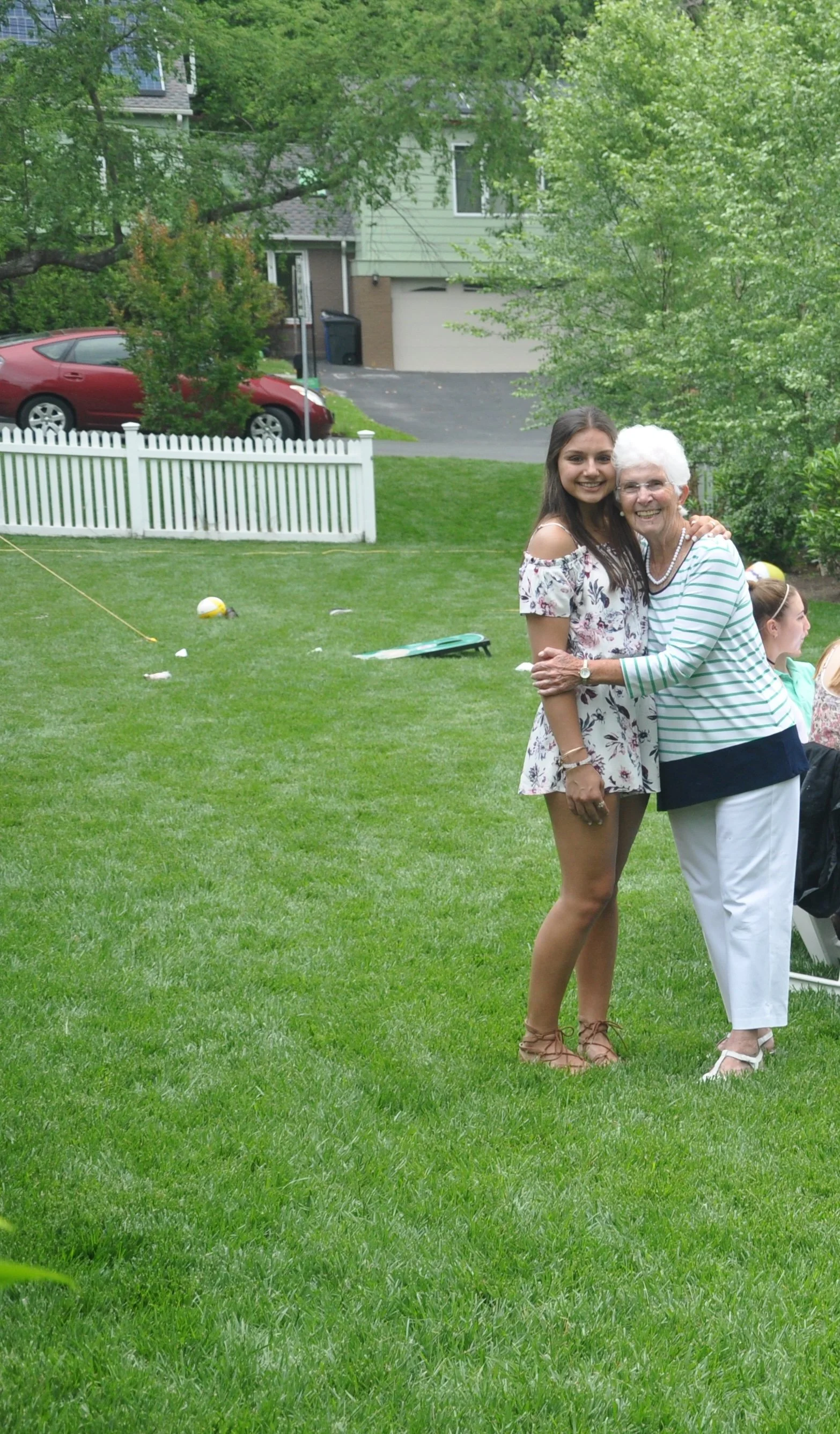
My grandmother has Alzheimer’s. Watching her go through the different stages has been so difficult. I miss her and her fun-loving personality, always ready for an adventure. I wish I had had more time to hang out with her and get to know her as an adult. Spending time with her, I can catch glimpses of her personality, but it's getting harder and harder to see. I miss the person I knew before this happened.
Nina G., Family member
Phoenix, AZ
Unfortunate
As a healthcare provider, working with patients who have dementia is both challenging and profoundly meaningful. Each individual’s journey through the various stages of the disease is unique, no two cases are ever quite the same. It is deeply difficult to witness the slow decline that dementia brings, especially as patients progress into its terminal stages. The gradual loss of memory, independence, and recognition can be heartbreaking not only for families but also for those of us who provide care.
Despite the sadness that often accompanies this disease, it is a privilege to support patients and their loved ones through such a vulnerable time. I would encourage providers and the family to offer compassionate care focusing on comfort, dignity, and honoring each patient’s wishes. While we cannot stop the progression of dementia, we can ensure that our patients (and families) feel valued, respected, and cared for every step of the way.
Christina Byam, Nurse practitioner
Washington, DC
Unpredictable
Dealing with people with cognitive deficits is very unpredictable, you'll never know what version of the person you will see and get to mingle with. While it can be frustrating and disheartening at times, this presentation of dementia challenges me to change the way I interact with my patients and teaches me how to be more patient and understanding. They'll have good days, and not so good days, and while it's more challenging to engage them on their not-so-good days, it forces me to come up with creative ways to connect with them. Sometimes it will be successful, other times it will be a failure, but the most important thing is I get to come back and try again.
Anonymous, Professional treating people living with Alzheimer’s
Gaithersburg, MD